What Are Real Estate Disclosure Requirements in Berks County, PA? (2026 Guide)
Who This Guide Is For
- Berks County homeowners preparing to sell
- Sellers confused by municipal inspections and Act 133
- Buyers reviewing seller disclosures before settlement
- Anyone selling in Reading, Wyomissing, West Reading, or Spring Township
Quick answer: Sellers in Berks County must complete Pennsylvania’s Seller Disclosure Statement and may also be subject to local Use & Occupancy inspections depending on the municipality. Municipal violations cannot stop a sale thanks to Act 133 — but inspections still matter.
- ✔ State disclosure required before signing
- ✔ Municipal inspections vary by township
- ✔ Act 133 protects sellers from delayed closings
Real estate disclosure requirements in Berks County combine Pennsylvania’s statewide Real Estate Seller Disclosure Law with municipal property transfer inspection rules that vary by location. Understanding both is critical to avoiding settlement delays, buyer disputes, and legal liability.
Pennsylvania Seller Disclosure Requirements
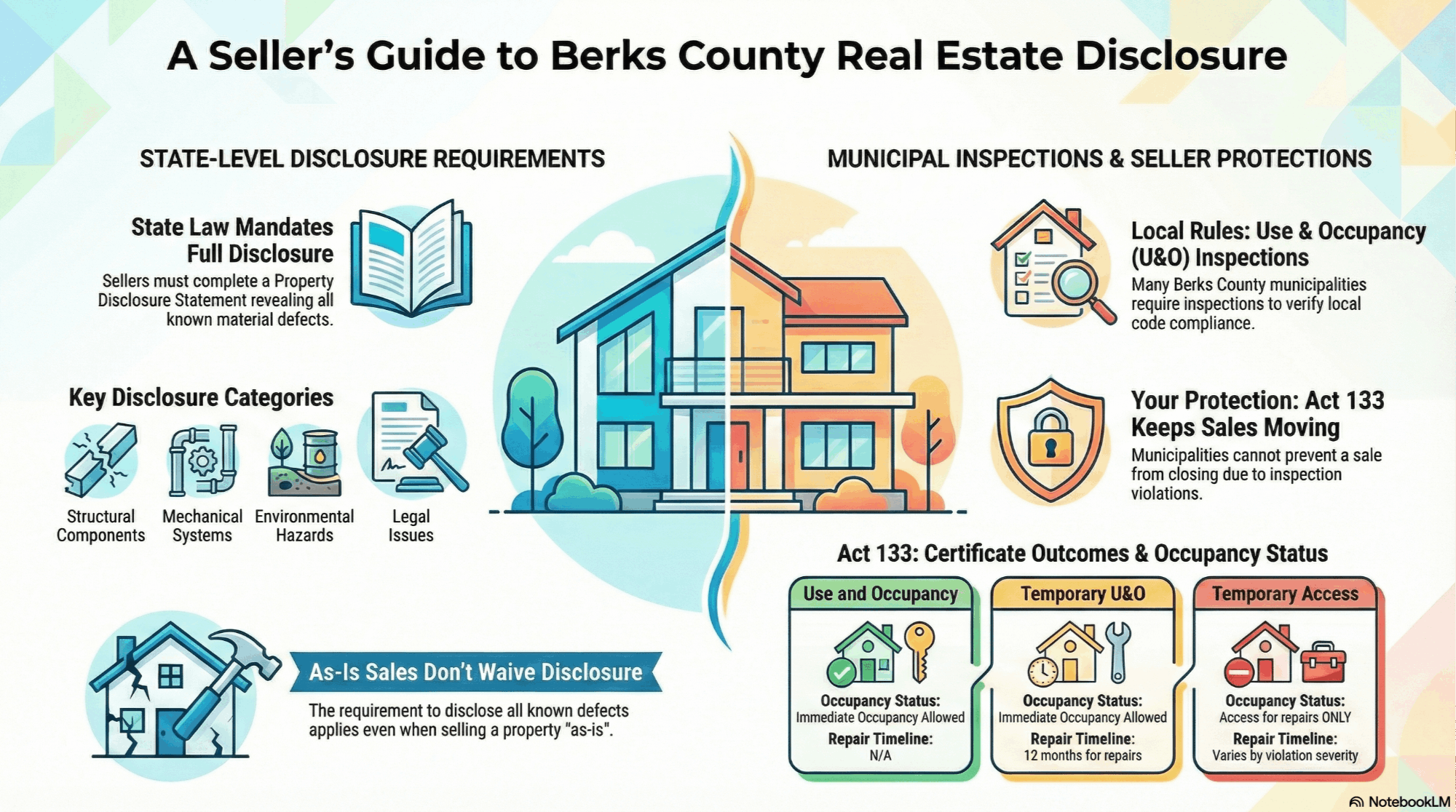
Pennsylvania law requires sellers to complete a Property Disclosure Statement based on their actual knowledge before executing an agreement of sale.
- Structural systems (roof, foundation, walls)
- Mechanical systems (HVAC, plumbing, electrical)
- Water, sewage, and drainage issues
- Environmental hazards (lead, radon, asbestos)
- Zoning violations, easements, or legal issues
As-is sales do NOT remove disclosure obligations.
Municipal Property Transfer Inspections in Berks County
Some municipalities require Use & Occupancy (U&O) or property transfer inspections. These vary widely.
City of Reading
Requires a Certificate of Transfer and Health & Safety inspection. Sellers must apply within 15 days of listing.
West Reading Borough
Requires Certificate of Occupancy inspection prior to sale.
Spring Township
Requires inspection with a $150 application fee.
Important: Not all Berks County municipalities require inspections. Always confirm locally.
Act 133 of 2016: Seller Protections
Act 133 prevents municipalities from blocking real estate transactions due to inspection violations.
| Certificate | Occupancy Allowed? | Repair Timeline |
|---|---|---|
| Use & Occupancy | Yes | N/A |
| Temporary U&O | Yes | 12 months |
| Temporary Access | No (repairs only) | Until safety issues resolved |
Municipalities cannot require escrow, bonds, or pre-settlement repairs for non-substantial violations.
Lead-Based Paint Disclosure
Homes built before 1978 must comply with federal lead-based paint disclosure laws.
- Disclose known lead hazards
- Provide EPA pamphlet
- Allow 10-day inspection period (unless waived)
Berks County Seller Disclosure Checklist
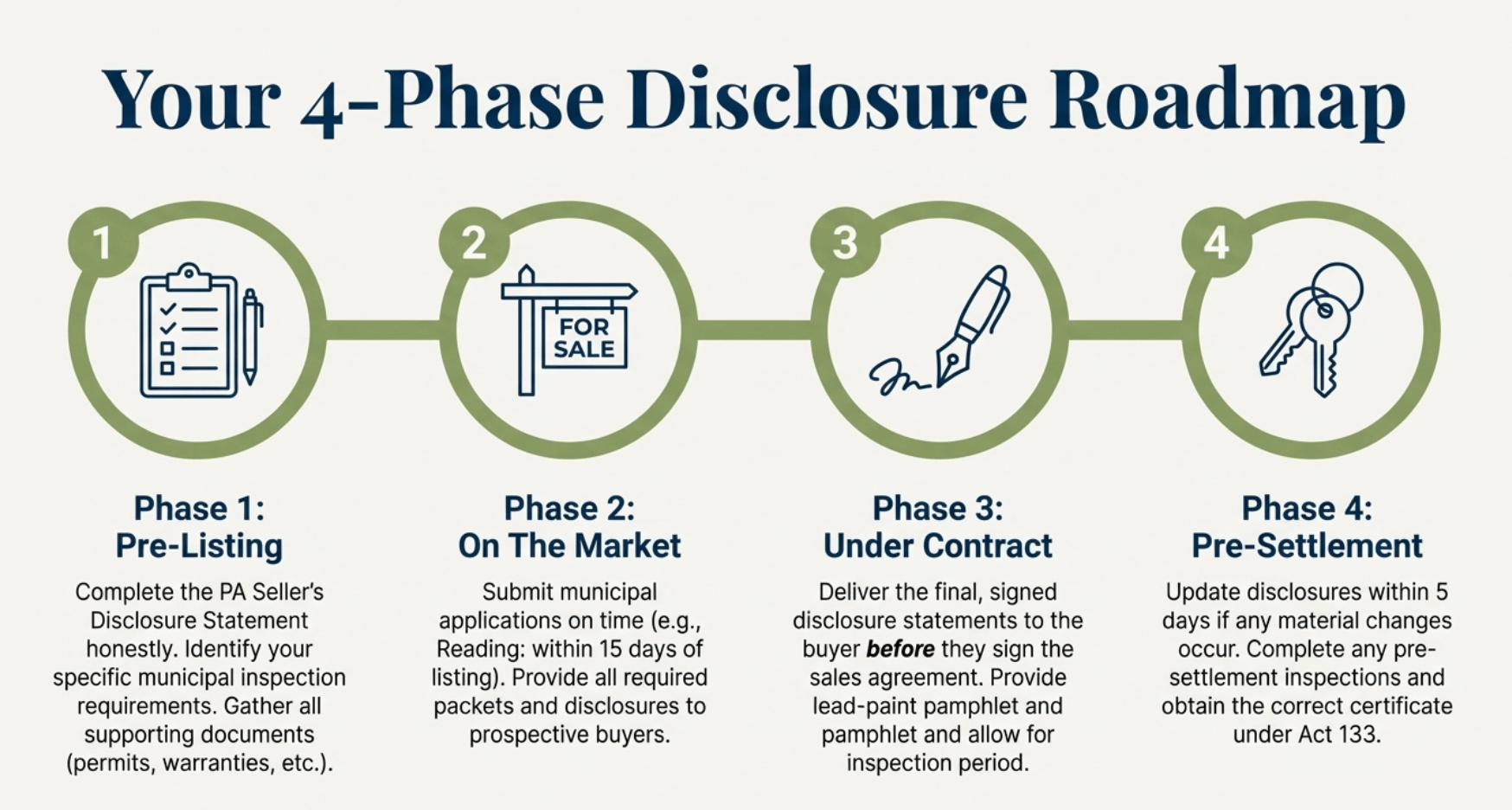
- Complete Seller Disclosure Statement
- Confirm municipal inspection requirements
- Deliver disclosures before agreement of sale
- Update disclosures if conditions change
- Prepare deed & Recorder of Deeds requirements
Common Disclosure Mistakes to Avoid
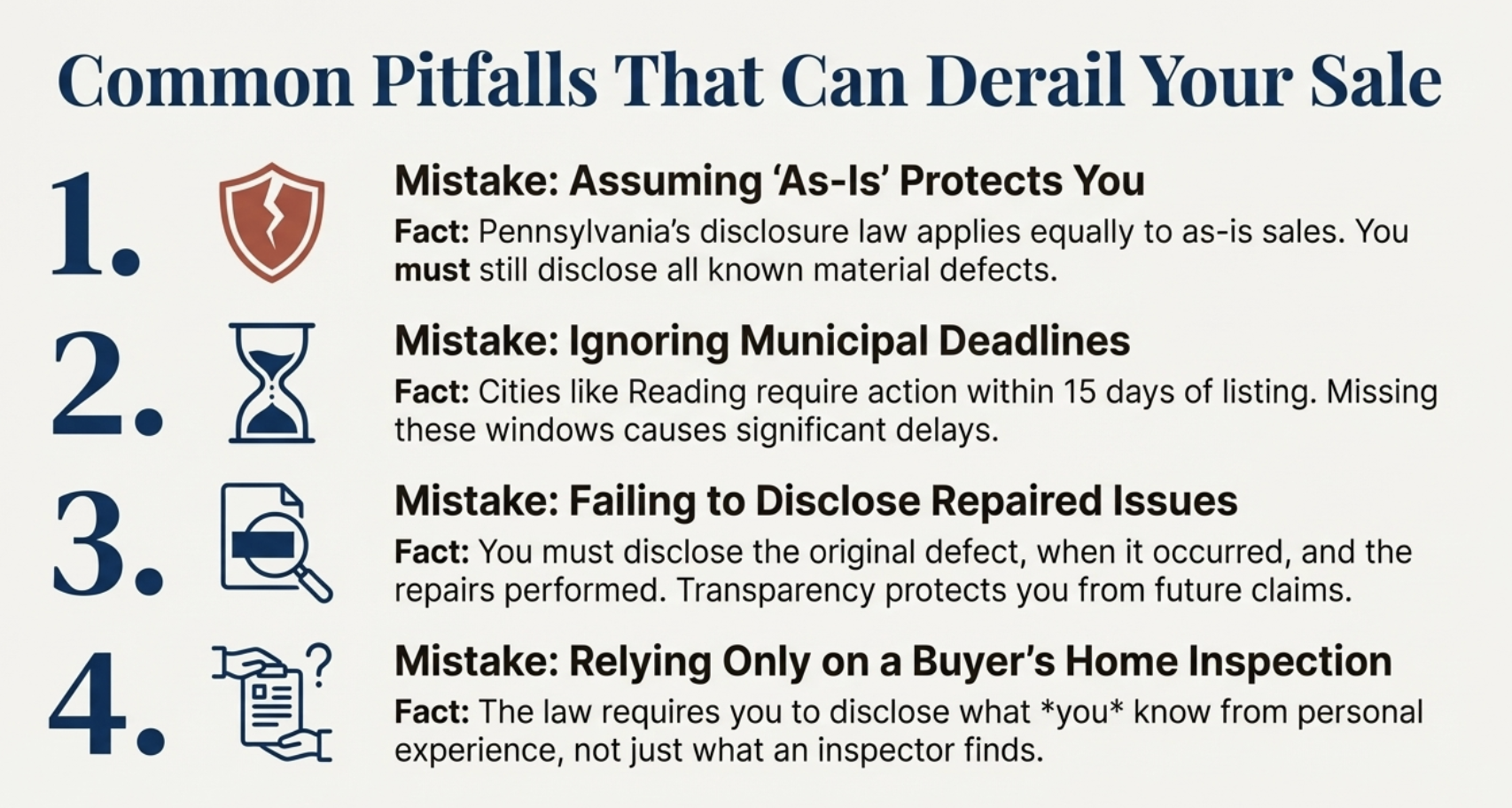
- Failing to disclose known past issues
- Assuming as-is eliminates liability
- Missing municipal deadlines
- Relying solely on inspections instead of personal knowledge
Frequently Asked Questions
Can municipal violations stop my Berks County sale?
No. Act 133 prohibits municipalities from blocking settlement.
Do I need to disclose repaired issues?
Yes. Repaired material defects should still be disclosed.
What if I discover a defect after disclosure?
You must amend disclosures within five days.
Work With a Berks County Disclosure Expert
Matthew Gantkowski helps Berks County sellers navigate disclosure laws, municipal inspections, and Act 133 protections to ensure smooth closings.
Matthew Gantkowski | RE/MAX of Reading
License ID: RS366252
📞 (484) 719-7000
✉️ mgantkowski@goberkscounty.com
🌐 mattsellsberks.com
This article is for educational purposes only and does not constitute legal advice. Always consult qualified professionals.
Categories
Recent Posts