
Questions to Ask Neighbors Before Buying in Berks County PA
Quick Answer: What Questions Should You Ask Neighbors Before Buying?
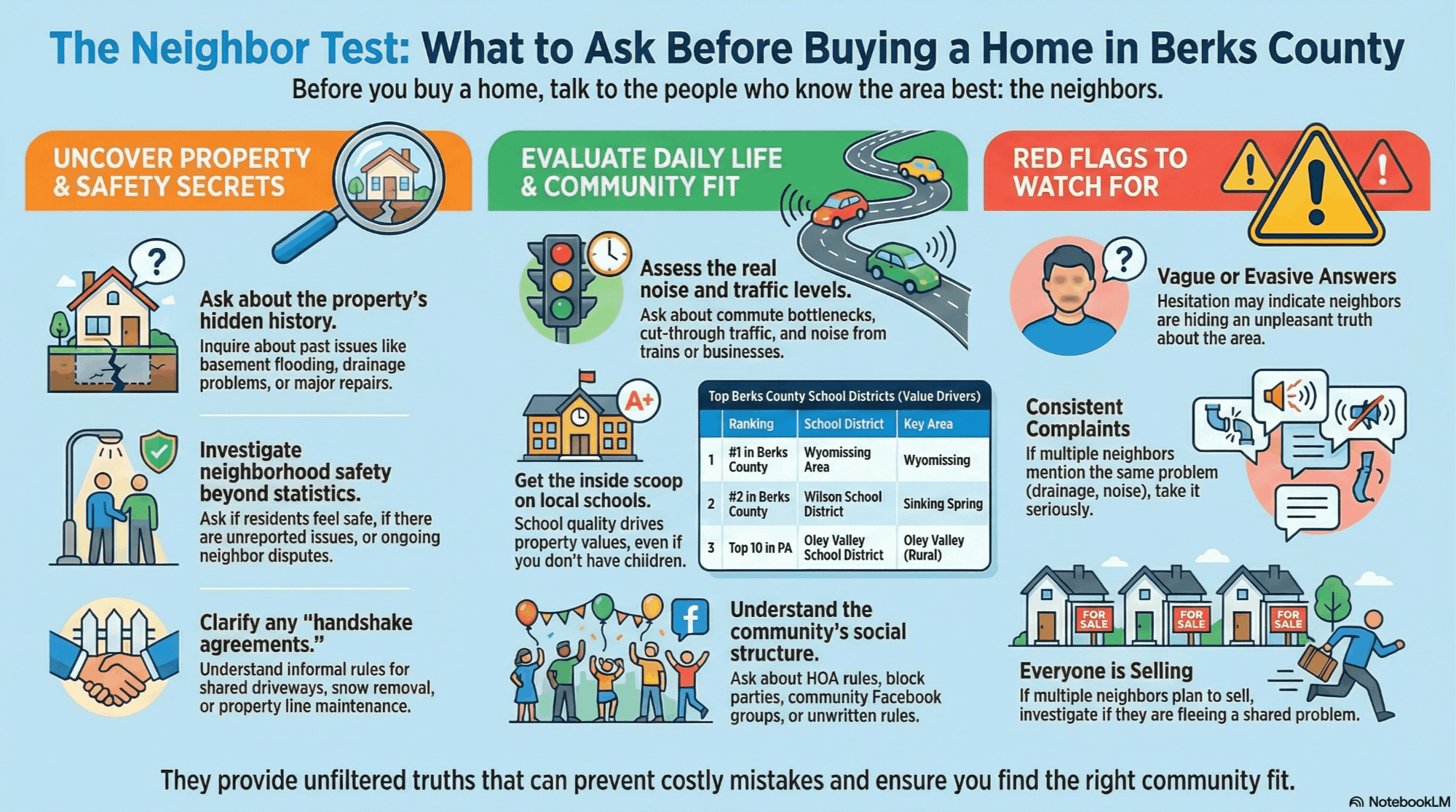
Prospective homebuyers in Berks County should ask neighbors about neighborhood safety, property history, school quality, noise levels, traffic patterns, and community dynamics. Neighbors provide unfiltered insights about daily life, hidden property issues, and local infrastructure that disclosure forms and online research cannot capture. These conversations reveal critical information about drainage problems, parking restrictions, HOA politics, and upcoming developments that directly impact property values and quality of life.
Why Talking to Neighbors Before Buying Matters in Berks County
Prospective homebuyers in Berks County who skip neighbor conversations miss critical intelligence that can prevent costly mistakes. While home inspections reveal structural defects and online research provides statistics, current residents offer ground-level truth about daily life in Wyomissing, Reading, and Sinking Spring neighborhoods.
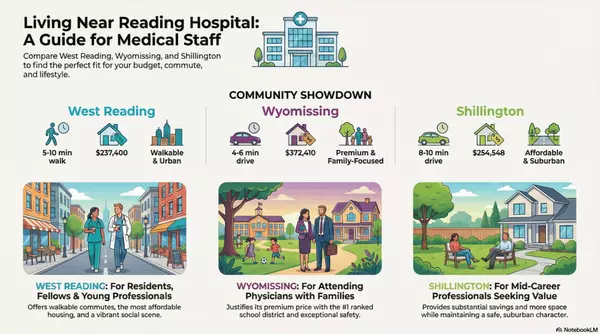
Neighbors share information about unreported incidents, basement flooding patterns, neighbor disputes, and informal property line agreements that never appear on disclosure forms. Understanding these dynamics protects both financial investment and quality of life in communities ranging from prestigious Wyomissing properties near Reading Hospital to rural Oley Valley farms.
Essential Questions About Neighborhood Character and Safety
How Long Have You Lived Here?
Opening with this question establishes rapport and credibility. Long-term residents in West Reading, Exeter Township, or Spring Township have witnessed development patterns, demographic shifts, and whether property values are climbing or declining. These residents provide historical context about neighborhood evolution that recent arrivals cannot offer.
What Do You Love Most and What Would You Change?
This open-ended inquiry encourages honest feedback without restrictions. Unlike real estate professionals bound by fair housing regulations, neighbors freely discuss community culture, local amenities, and daily frustrations. Responses reveal whether residents feel invested in the neighborhood or are planning to leave.
How Safe Is the Neighborhood?
While online crime statistics provide data, neighbors know about unreported incidents, loitering patterns, vandalism trends, and whether residents feel comfortable walking after dark. Asking if neighbors have installed security systems and whether active neighborhood watch programs exist provides practical safety assessment.
In Berks County, municipalities like Wyomissing, West Reading, and Sinking Spring consistently rank among the safest communities according to NeighborhoodScout crime data. However, neighborhood-level variations exist within each municipality.
Have There Been Ongoing Disputes Between Neighbors?
This critical question reveals whether buyers are entering existing conflicts or harmonious communities. Problem neighbors create ongoing stress that cannot be easily resolved since homeowners cannot change who lives next door. Previous disputes about noise, property boundaries, or pets signal potential future conflicts.
Critical Questions About the Specific Property
Do You Know Anything About This Property or Previous Owners?
Neighbors often possess inside knowledge absent from disclosure documents. They may know whether the basement floods during heavy Pennsylvania rains, if tree roots affect plumbing, or whether previous owners meticulously maintained the home. Asking specifically about drainage issues, foundation problems, or shared property line maintenance arrangements prevents unpleasant surprises.
How Well Did Previous Owners Maintain the Property?
This question reveals whether buyers are inheriting deferred maintenance or a well-cared-for home. Neighbors may know about recent improvements, remodeling projects, or temporary fixes that masked underlying problems. This intelligence helps buyers budget for immediate repairs and long-term maintenance.
Are There Shared Responsibilities or Handshake Agreements?
Some Berks County neighborhoods maintain informal arrangements about trimming hedges on property lines, snow removal, or shared driveway access. Understanding these expectations before purchase prevents future conflicts with neighbors who assume continuity of previous agreements.
Questions About Schools and Family Environment
What Has Been Your Experience With Local Schools?
For Berks County buyers, school quality drives property values regardless of whether buyers have children. While online ratings provide general rankings, parents offer firsthand accounts about principals, teachers, extracurricular programs, and school culture.
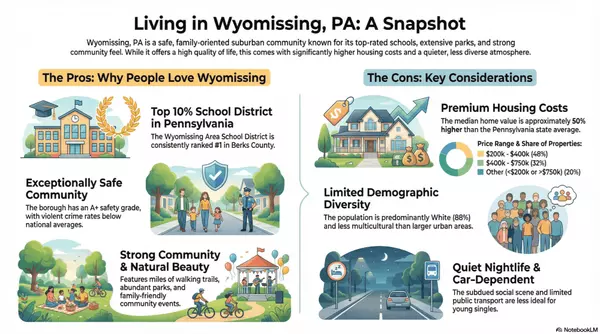
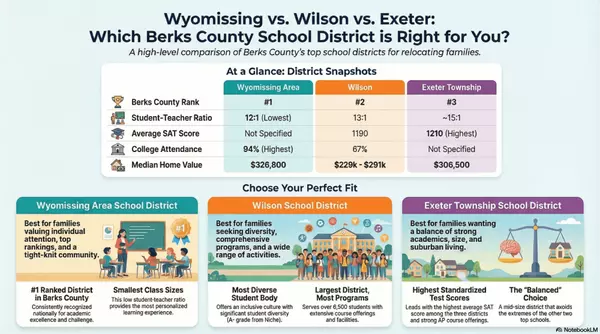
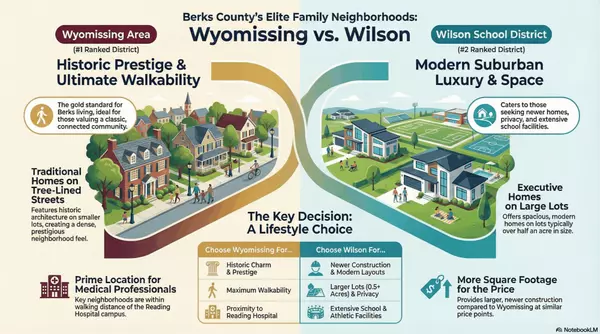
The Wyomissing Area School District ranks #1 in Berks County, while Wilson School District (#2) serves Sinking Spring and West Lawn. Oley Valley School District ranks among Pennsylvania's top 10 with a rural setting. Neighbors can specify which schools their children attend, bus pickup schedules, and how school traffic affects neighborhood congestion. For comprehensive school district analysis, review the Wyomissing real estate market guide.
Is the Neighborhood Kid-Friendly and Pet-Friendly?
Families and pet owners should ask whether nearby babysitters, playmates, and dog walkers are available. Inquiring about local parks, walking trails, and Blue Marsh Lake access matters for active families. Sinking Spring, Bernville, and Exeter Township offer 5-10 minute proximity to Blue Marsh Lake recreation.
Questions About Community Life and Local Amenities
Are There Neighborhood Events, HOAs, or Community Groups?
Many Berks County neighborhoods maintain Facebook groups, block parties, or regular gatherings. Understanding social structure helps buyers determine community fit and activity level. Ask whether HOA dues apply, how strict regulations are enforced, and whether board politics or conflicts exist.
What Local Services and Businesses Do You Recommend?
Neighbors provide shortcuts to trusted plumbers, electricians, landscapers, and restaurants. This question also reveals what amenities are genuinely walkable versus requiring driving. In walkable communities like West Reading and Wyomissing, proximity to shops and dining represents a major selling point.
Where Do You Shop for Groceries, Gas, and Entertainment?
This provides practical insight into daily routines and commute patterns. Berks County offers both urban Reading environments and rural farmland settings, creating significant convenience variations by location.
Questions About Traffic, Noise, and Infrastructure
What's the Traffic Like and When Are Peak Times?
Ask about school drop-off congestion, commute bottlenecks, and whether cut-through traffic affects residential streets. In areas near Reading's downtown or major employment centers like Reading Hospital, traffic patterns significantly impact quality of life.
What About Noise Levels?
Traffic noise, train horns, airport flight paths, and commercial activity all affect wellbeing. Research from the National Institute of Environmental Health Sciences indicates that traffic noise exposure increases depression risk by 25% and elevates heart disease risk. Ask neighbors when noise is most disruptive and whether it bothers current residents.
Are There Any Infrastructure Issues?
Inquire about water pressure, sewer backups, power outages, internet reliability, and utility costs. Ask whether streets flood during heavy Pennsylvania rains and whether municipalities handle snow removal effectively. These practical considerations affect daily life and long-term maintenance costs.
Questions About Local Government and Services
How Responsive Is Local Government and Code Enforcement?
Ask about trash pickup schedules, recycling programs, and whether municipalities maintain roads properly. Berks County municipalities have varying service levels and tax structures that affect homeowner satisfaction.
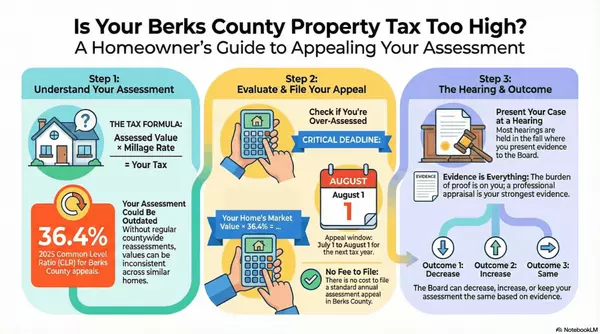
Are There Any Upcoming Tax Increases or Special Assessments?
This question is particularly relevant in Berks County, where some municipalities are considering EMS taxes to fund emergency medical services. According to Spotlight PA reporting, Leesport proposed a 0.5 mil tax adding $50 annually to a $100,000 home's tax bill, while other townships explore similar measures. Property tax changes significantly affect housing affordability.
Has Emergency Response Time Been Adequate?
With EMS funding concerns across Berks County, ask neighbors about their experiences calling 911 and whether ambulance or fire response meets expectations. Emergency service reliability directly impacts family safety.
Questions About Changes and Future Development
What Has Changed Since You Moved In?
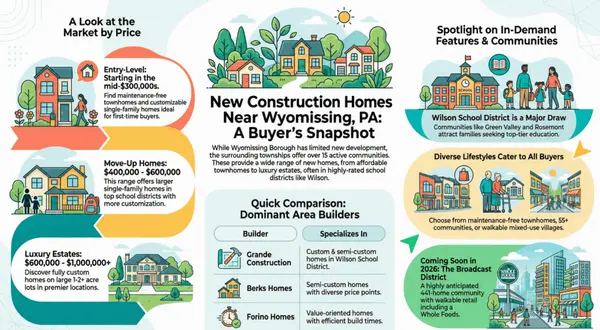
This reveals development trends, whether new businesses are opening or closing, and if neighborhood character is shifting. Berks County has seen growth in master-planned communities like Green Valley, Hawkstone Village, and Preserve at Flying Hills.
Are There Any Planned Developments or Zoning Changes?
Neighbors often know about upcoming projects before widespread publicity. New commercial development, road widening, or apartment construction affects traffic, noise, and property values. Buyers should verify neighbor reports through municipal planning departments.
Do You Have Any Plans to Sell Soon?
While this may seem forward, it reveals whether neighbors are committed to the area or fleeing problems. Multiple residents planning to sell simultaneously may signal underlying neighborhood issues.
Questions About Utilities, Costs, and Practical Matters
What Are Your Average Utility Costs?
Ask about monthly electric, gas, water, and sewer bills to budget accurately. Older homes in historic Berks County neighborhoods may have higher heating costs due to insulation limitations and aging HVAC systems. Understanding typical utility expenses helps buyers assess total monthly housing costs beyond mortgage payments.
How Is Parking Handled?
If street parking is limited or overnight parking restrictions apply, buyers need advance knowledge. Ask whether unwritten rules exist about parking in front of specific houses and whether guests will have convenient parking options during visits.
Are There Any Quirks or Unwritten Rules?
Every neighborhood maintains customs ranging from Halloween decorating contests to lawn care expectations. Understanding these community norms helps new residents avoid social missteps and integrate smoothly into neighborhood culture.
How to Approach Neighbors Effectively
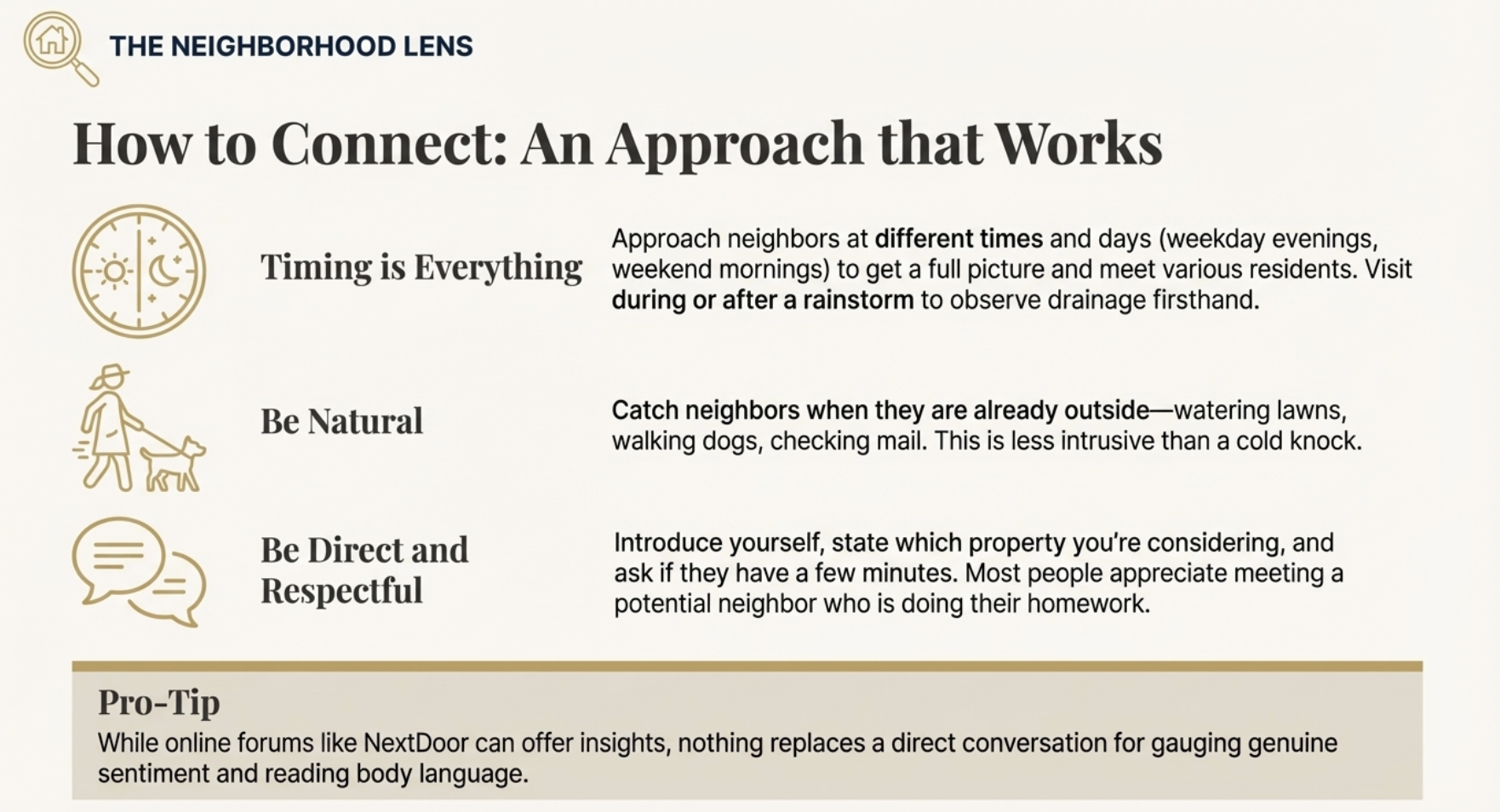
Catch neighbors when they're outside watering lawns, checking mail, walking dogs, or getting out of their cars. Introduce yourself, explain that you're considering buying the property, and ask if they have a few minutes to chat. Most people willingly share their experiences since they appreciate meeting potential neighbors.
If face-to-face connection proves difficult, consider checking neighborhood-specific Facebook groups or NextDoor forums for insights. However, nothing replaces direct conversation for reading body language, asking follow-up questions, and gauging genuine sentiment versus filtered online personas.
Timing Your Neighbor Conversations
Visit the neighborhood at different times to observe traffic patterns and meet various residents. Weekend mornings often find homeowners doing yard work, while weekday evenings capture commuters returning home. Visiting during school hours reveals bus routes and mid-day activity levels.
Consider visiting the property during and after rainstorms to observe drainage, flooding potential, and whether streets become impassable. Pennsylvania weather patterns create seasonal variations that affect property conditions.
Why This Matters for Berks County Homebuyers
Berks County offers remarkable diversity from prestigious Wyomissing properties to rural Oley Valley farms. The county combines affordability with Philadelphia access (50 miles, approximately one hour), making it attractive to commuters. However, the area faces challenges including EMS funding shortfalls, state budget impacts on county services, and rising homelessness according to Reading Eagle coverage.
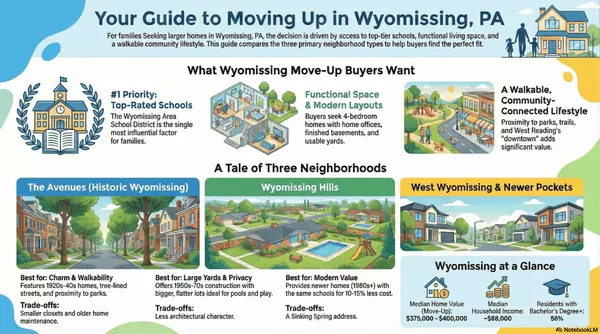
Understanding these dynamics through neighbor conversations ensures informed decisions. Properties in top school districts like Wyomissing and Wilson outperform county appreciation by 2-3% annually due to inventory constraints and sustained demand. For detailed market analysis, review the Wyomissing move-up buyer guide.
Choosing the right Berks County neighborhood based on ground-level intelligence from current residents protects both financial investment and quality of life. When buying and selling simultaneously, understanding neighborhood dynamics becomes even more critical for coordinating timing and avoiding contingency complications.
Questions Organized by Priority
| Priority Level | Question Category | Why It Matters |
|---|---|---|
| Critical | Property history and hidden issues | Prevents costly surprises after closing; reveals drainage, foundation, or maintenance problems not disclosed |
| Critical | Neighborhood safety and disputes | Impacts daily quality of life; problem neighbors cannot be easily changed after purchase |
| High | School quality and district boundaries | Drives property values regardless of whether buyers have children; affects resale potential |
| High | Traffic patterns and noise levels | Affects daily commute, sleep quality, and stress levels; difficult to assess during single property showing |
| Moderate | HOA rules and community culture | Determines social fit and reveals hidden costs through dues or special assessments |
| Moderate | Utility costs and infrastructure | Helps budget accurately for monthly expenses beyond mortgage payments |
| Moderate | Future development plans | Upcoming construction or zoning changes affect property values and neighborhood character |
Red Flags to Watch For in Neighbor Responses
Pay attention to hesitation, vague answers, or contradictions between different neighbors' accounts. If multiple neighbors mention the same problem—whether drainage issues, noise complaints, or neighborhood conflicts—take these warnings seriously.
Be wary if neighbors seem evasive about simple questions or if they suggest speaking with specific residents while avoiding others. This may indicate neighborhood factions or ongoing disputes.
If neighbors enthusiastically recommend the neighborhood but mention they're planning to sell soon, investigate their motivations. Are they downsizing naturally, or are they escaping problems they're not disclosing?
Frequently Asked Questions
Is it appropriate to knock on doors to talk to neighbors before buying?
Yes, catching neighbors outside when they're already visible is preferable, but respectfully knocking on doors during reasonable hours (10 AM - 7 PM) is acceptable practice. Most neighbors appreciate meeting potential new residents and prefer engaged buyers to absentee owners.
Should I tell neighbors which property I'm considering buying?
Yes, being transparent about which property attracts your interest helps neighbors provide specific, relevant information about that home's history, previous owners, and property-specific issues like drainage or tree roots. Vague inquiries yield less useful responses.
How do I verify information neighbors tell me?
Cross-reference neighbor accounts with public records, municipal planning departments, and online crime statistics. Contact local police departments for crime reports, check county assessment records for tax history, and review planning commission minutes for upcoming developments. If neighbors mention specific issues like flooding, request documentation from the seller through your real estate agent.
Expert Guidance for Your Berks County Home Search
Talking to neighbors represents essential due diligence that protects homebuyers from costly mistakes and ensures community fit. The intelligence gathered through these conversations cannot be replicated through online research or professional inspections alone.
For buyers navigating Berks County's diverse housing market—from Wyomissing's premium properties to Sinking Spring's family-friendly neighborhoods—understanding neighborhood dynamics through resident conversations reveals opportunities and avoids pitfalls that impact both investment value and daily quality of life.
Whether selling a starter home or using equity to buy your next property, thorough neighborhood research ensures confident decisions in Berks County's competitive real estate market.
About the Author
Matthew Gantkowski | Your Berks County Move-Up Specialist
License ID: RS366252
Matthew Gantkowski is a lifelong Berks County resident and real estate strategist specializing in move-up transitions throughout Wyomissing, Reading, Sinking Spring, and surrounding communities. With deep roots in the area, Matthew provides insider perspective on neighborhood dynamics, school districts, and property values that only comes from truly living in these communities.
Matthew's background in team management and customer relations shapes his strategic approach to real estate. Rather than simply listing properties, Matthew crafts customized marketing plans that showcase each home's unique story and attract serious buyers willing to pay premium prices.
Professional Track Record:
- 3+ years serving Berks County (since October 2022)
- 43+ successful transactions across southeastern Pennsylvania
- Consistent 5-star client satisfaction across all platforms
- Specialized expertise in Wyomissing, Reading, Kutztown, and surrounding Berks County communities
- Top producing agent in rural markets including Kutztown, Barto, and Elverson specializing in larger acreage properties and farms
- RE/MAX of Reading Team Member
- Expert in first-time homebuyers and move-up transitions
Why Berks County Families Trust Matthew Gantkowski
Local Knowledge That Matters: Born and raised in Berks County, Matthew brings decades of neighborhood knowledge that out-of-area agents cannot match. He knows which streets have the best school access, where property values are climbing, and which communities fit different lifestyles—from suburban Wyomissing to rural properties with larger acreage.
Strategic Marketing That Sells: Matthew creates customized marketing strategies designed to position homes for maximum exposure and top dollar, not just generic listing photos.
Honest, Unfiltered Guidance: No sales pressure, no games. Matthew provides exactly what buyers see, what needs attention, and what returns the best investment so clients make confident decisions backed by local market data.
Seamless Move-Up Coordination: Selling and buying simultaneously? Matthew orchestrates the timing, negotiates contingencies, and manages both transactions so clients transition smoothly without the stress of temporary housing or double moves.
Contact Matthew:
📍 RE/MAX of Reading
1290 Broadcasting Road, Wyomissing, PA 19610
📞 (484) 719-7000
✉️ mgantkowski@goberkscounty.com
🌐 mattsellsberks.com
Ready to make your move? Contact Matthew to discuss how he can help you navigate the Berks County market with confidence.
Categories
Recent Posts